


By Peter A. McCullough, MD, MPH
In a wide-ranging and deeply informative discussion, Dr. Peter McCullough speaks with John Molinaro, a Board Certified Behavior Analyst (BCBA) from Toronto, Ontario, who has spent nearly a decade working with individuals with autism and other special needs. The interview offers a comprehensive overview of the autism epidemic, its diagnostic evolution, and the therapeutic interventions used today—particularly the application of Applied Behavior Analysis (ABA). Molinaro’s grounded and compassionate perspective highlights both the progress and pressing challenges facing families navigating autism care in North America.
📈 Rising Prevalence and the Modern Autism Landscape
Molinaro and McCullough begin by reviewing the extraordinary increase in autism diagnoses. Whereas autism once affected 1 in 10,000 children in the 1980s, the rate today is approximately 1 in 30 to 1 in 40, depending on whether one looks at U.S. or Canadian figures. Molinaro stresses that while improved screening plays some role, it cannot explain the magnitude of this explosion. “Our diagnostic tools didn’t get that much sharper,” he notes, affirming that there is a genuine rise in autistic prevalence observable even to lay observers.
Dr. McCullough, drawing from his clinical experience, concurs that autism now permeates nearly every family’s experience — he estimates at least 25% of people at his public events have direct contact with someone on the spectrum. Both men view autism not as a niche disorder but as an epidemic-scale societal issue, the defining developmental disorder of this era.
🧠 Understanding Autism: Characteristics and Diagnosis
Molinaro outlines how autism is defined in the Diagnostic and Statistical Manual of Mental Disorders (DSM-5): persistent social-communication deficits alongside restricted, repetitive behaviors. Translating for the public, he describes it as a neurodevelopmental difference in how the brain processes and expresses information—an impairment in how someone “inputs and outputs” experience.
Diagnosis, he explains, relies on structured behavioral assessments such as the Autism Diagnostic Observation Schedule (ADOS), which classifies individuals into three severity levels:
Level 1 – requires “some support”; language relatively intact but struggles with social depth or transitions.
Level 2 – “substantial support”; moderate impairment in communication and functioning.
Level 3 – “very substantial support”; often nonverbal, with frequent self-stimulatory behavior and sometimes aggression or self-injury.
Molinaro notes that intellectual ability varies widely across the spectrum; autism is not an intellectual disability, though severe forms can coexist with cognitive challenges. He adds that the earlier “Asperger’s syndrome” category now falls under Level 1 autism, representing high-functioning individuals.
Sensory issues are another hallmark: many autistic individuals are hypersensitive to sound or light, hence the common sight of noise-canceling headphones in public. Eye contact avoidance, he clarifies, stems more from sensory overwhelm than disregard—it can feel “too intense” for some.
👶 Onset, Regression, and Comorbidities
Parents often describe normal early development followed by regression around 18–24 months, sometimes noted after the “one-year shots,” though Molinaro carefully states this as parental observation, not a confirmed causal link. Regardless, the pattern of normal infancy followed by developmental collapse is a well-documented phenomenon.
Common comorbidities include ADHD (often in one-third of autistic children), anxiety, gastrointestinal disturbances, and occasionally seizure disorders (~10%). Many children have overlapping behavioral and attention issues before school age, even if not formally diagnosed.
🧩 The Diagnostic Journey and Systemic Challenges
In Ontario and much of Canada, families face long waits. Referral usually begins when red flags are noticed—sometimes by educators or daycare workers—and proceeds through the family physician to specialists or psychologists. Molinaro reports that public wait times for assessment can exceed a year, delaying essential early therapy. Those who seek private diagnosis face costs around $3,000 or more.
After diagnosis, families often wait years more for funded support through the Ontario Autism Program (OAP)—five years, on average. In the meantime, many pay out-of-pocket for therapy costing $40,000 to $80,000 per year. McCullough calls this delay “a lost therapeutic window,” as earlier intervention yields better long-term outcomes.
🧰 Applied Behavior Analysis (ABA): The Gold Standard of Treatment
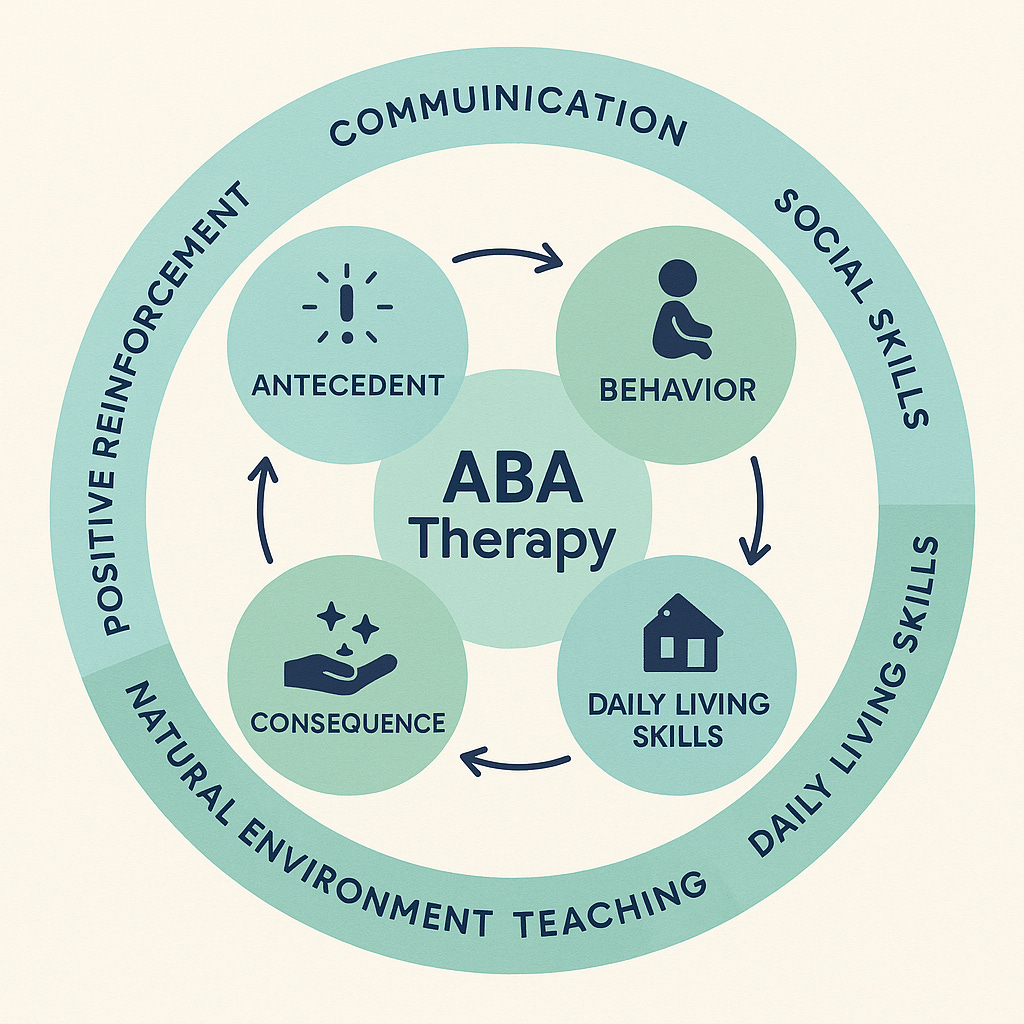
Molinaro describes ABA therapy as the scientific application of learning theory to shape meaningful behavior. Founded in the 1960s by psychologist Ivar Lovaas, ABA analyzes behavioral triggers, measures outcomes, and reinforces desirable actions through structured teaching. The aim, he explains, is independence—not robotic conformity, but functional communication and engagement in daily life.
Modern ABA has diversified:
Traditional ABA – highly structured, therapist-led sessions at tables, often intensive (25–40 hours weekly).
Naturalistic models like Pivotal Response Training (PRT) – more play-based and child-directed, integrating language, motivation, and social reinforcement.
Language acquisition is a cornerstone goal. Molinaro illustrates how nonverbal children can learn to “mand” (request) by incremental shaping—first reaching for a toy car, later approximating the sound “car,” rewarded each time progress is shown. Even small breakthroughs in communication transform the child’s interaction with family and peers.
ABA, he emphasizes, is not a quick fix. It requires significant time, clinician skill, and parental involvement. Parents must learn to replicate reinforcement techniques at home to generalize gains beyond the clinical setting.
⚖️ Family Struggles and Systemic Strain
Despite the therapeutic promise, families encounter exhausting realities. The combined financial and emotional toll is extraordinary: paying for therapy, navigating waitlists, coordinating between school and clinics. Many parents, Molinaro observes, resort to screen time or electronic devices simply to manage daily stress. “It’s not neglect—it’s survival,” he says compassionately, acknowledging the burnout and guilt parents often face.
Dr. McCullough echoes psychologist Leo Kanner’s 1940s observation that parents of autistic children are often exceptional people—remarkably intelligent, devoted, and resilient. Molinaro agrees, calling them “remarkable and heroic,” molded into excellence by necessity as they devote themselves to their children’s progress.
The conversation highlights a systemic irony: as autism rises, qualified professionals lag behind. With years-long queues and high burnout in behavioral health, both men call for strategic incentives to expand the workforce of child psychologists and behavior analysts.
🔮 Looking Forward: Integration, Innovation, and Hope
In closing, Molinaro turns toward the future. ABA will remain foundational, but he envisions complementary advances—perhaps safe neurological or pharmacologic adjuncts that address severe self-injurious or aggressive forms while respecting ethical limits. For many “Level 3” individuals, aggressive or self-stimulatory behavior currently leads to sedation with antipsychotics—an outcome he hopes to mitigate through gentler, brain-focused innovations.
McCullough underscores that autism has become “the epidemic of our generation”—the defining moral, scientific, and societal challenge. Molinaro’s calm, informed optimism suggests that while today’s systems are overburdened, early detection, intensive individualized care, parental empowerment, and greater public investment can transform lives.
Both end on a shared conviction: every child with autism, regardless of severity, deserves a path toward dignity, communication, and inclusion—and society must evolve the compassion and infrastructure to make that possible.
Please subscribe to FOCAL POINTS as a paying ($5 monthly) or founder member so we can continue to bring you the truth.
Peter A. McCullough, MD, MPH
FOCAL POINTS has partnered with Patriot Mobile to defend your medical freedom. Join Patriot Mobile today!


