


I joined Steve Gruber on Real America’s Voice to break down what is now the largest real-world human analysis of ivermectin and mebendazole in cancer patients.
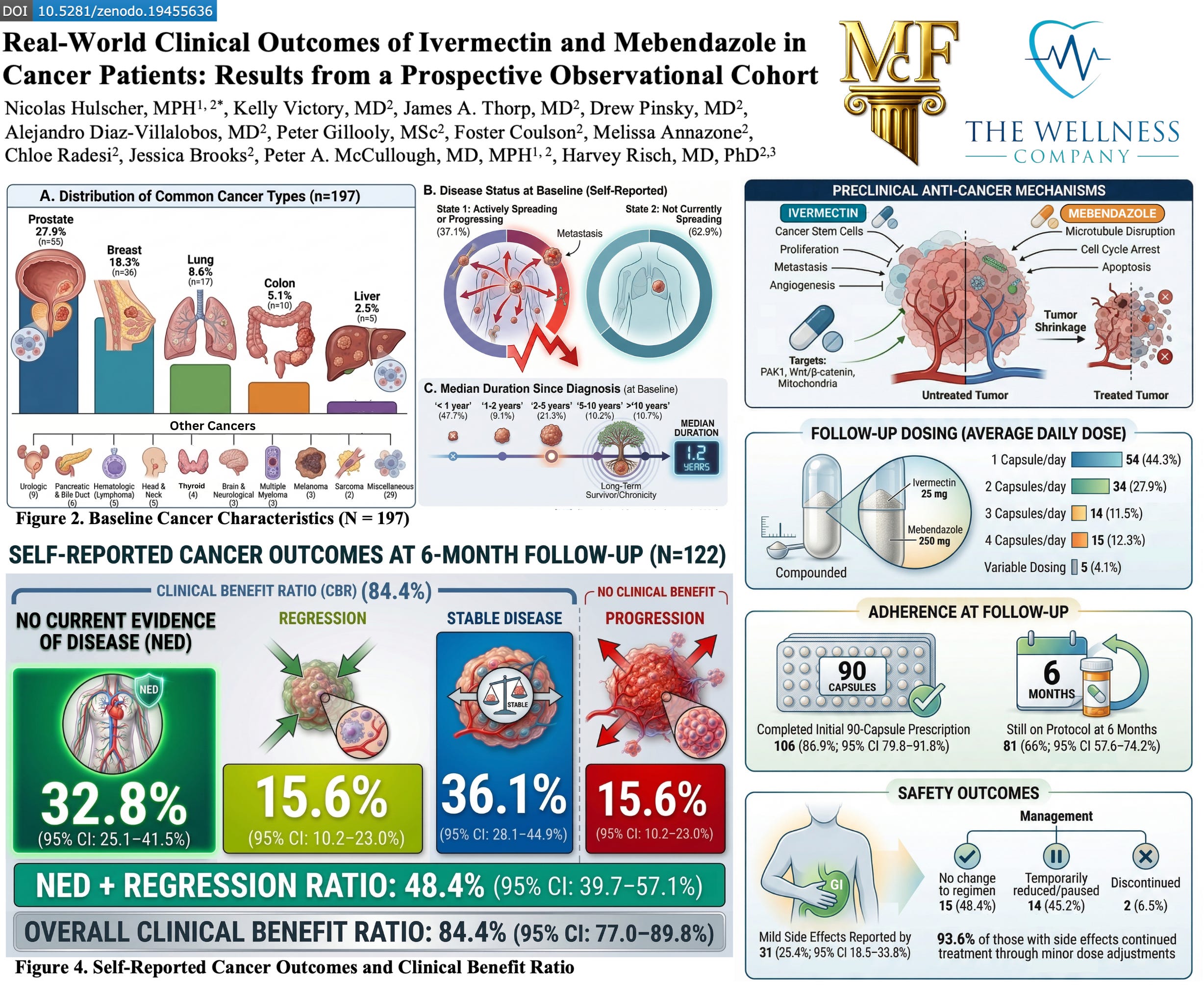

84.4% of the cancer patients taking ivermectin + mebendazole reported no evidence of disease, tumor regression, or cancer stabilization after 6 months.
That kind of signal doesn’t happen randomly. The key question is not just what we observed, but why.
There are now hundreds of preclinical studies—in both cell systems and animal models—showing that antiparasitic agents like ivermectin and mebendazole exert broad, multi-target anti-cancer effects across more than a dozen tumor types.
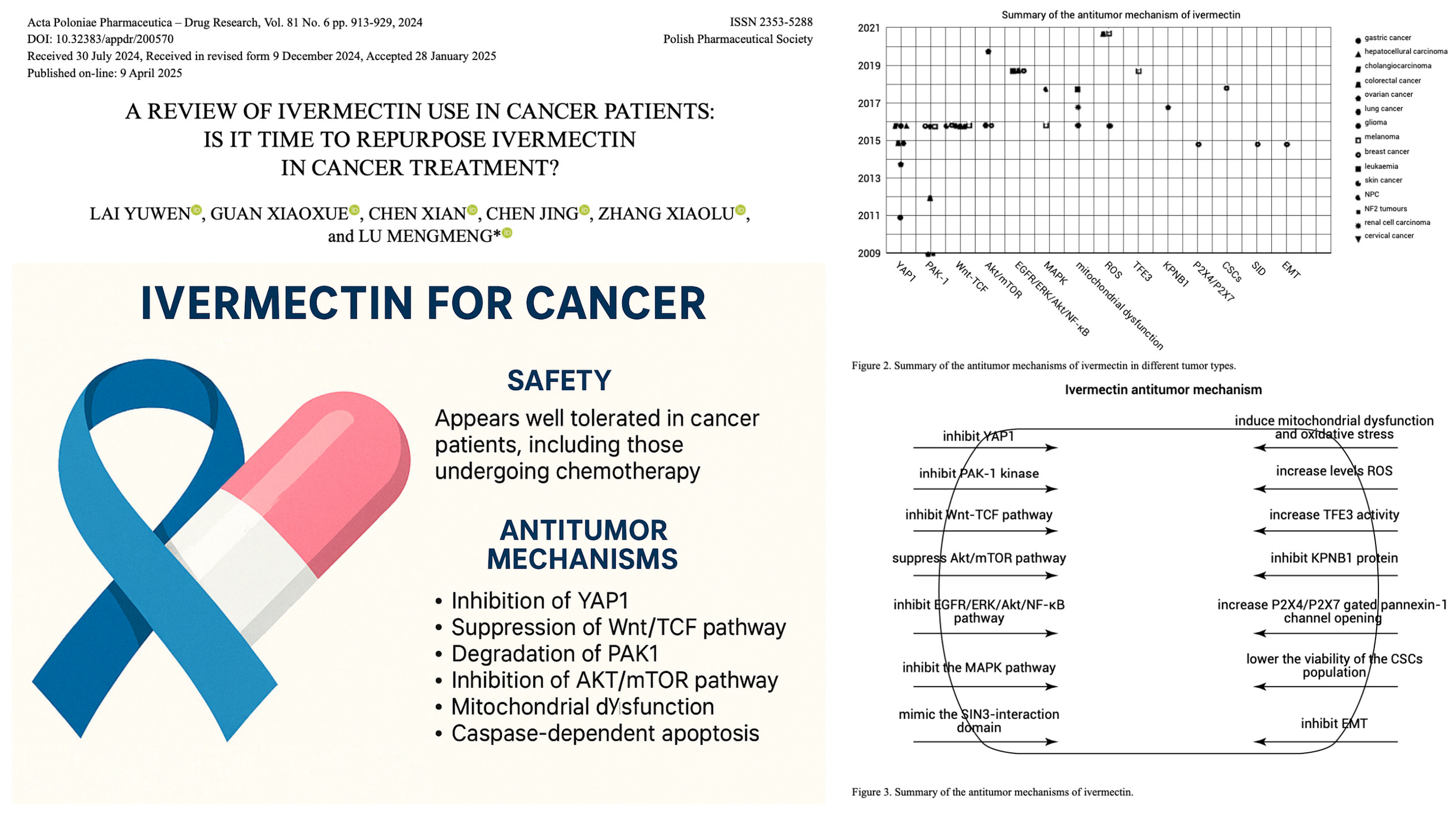

In other words, the clinical signal we observed is not surprising. It is biologically coherent. Three mechanisms stand out as central:
First, ivermectin appears to target cancer stem cells—the small, highly resistant population of cells that drive recurrence and metastasis. Most conventional therapies fail to eliminate these cells. You can shrink a tumor, but if the stem cells remain, the cancer often comes back. Laboratory data suggest ivermectin disrupts this root system.
Second, mebendazole interferes with microtubule formation, which is essential for cell division. When you disrupt microtubules, cancer cells lose their ability to replicate effectively. This creates a direct anti-proliferative effect.
Third, mebendazole also impacts tumor metabolism, particularly glucose utilization. Cancer cells are heavily dependent on glucose to fuel rapid growth. Limiting that pathway places them under significant metabolic stress.
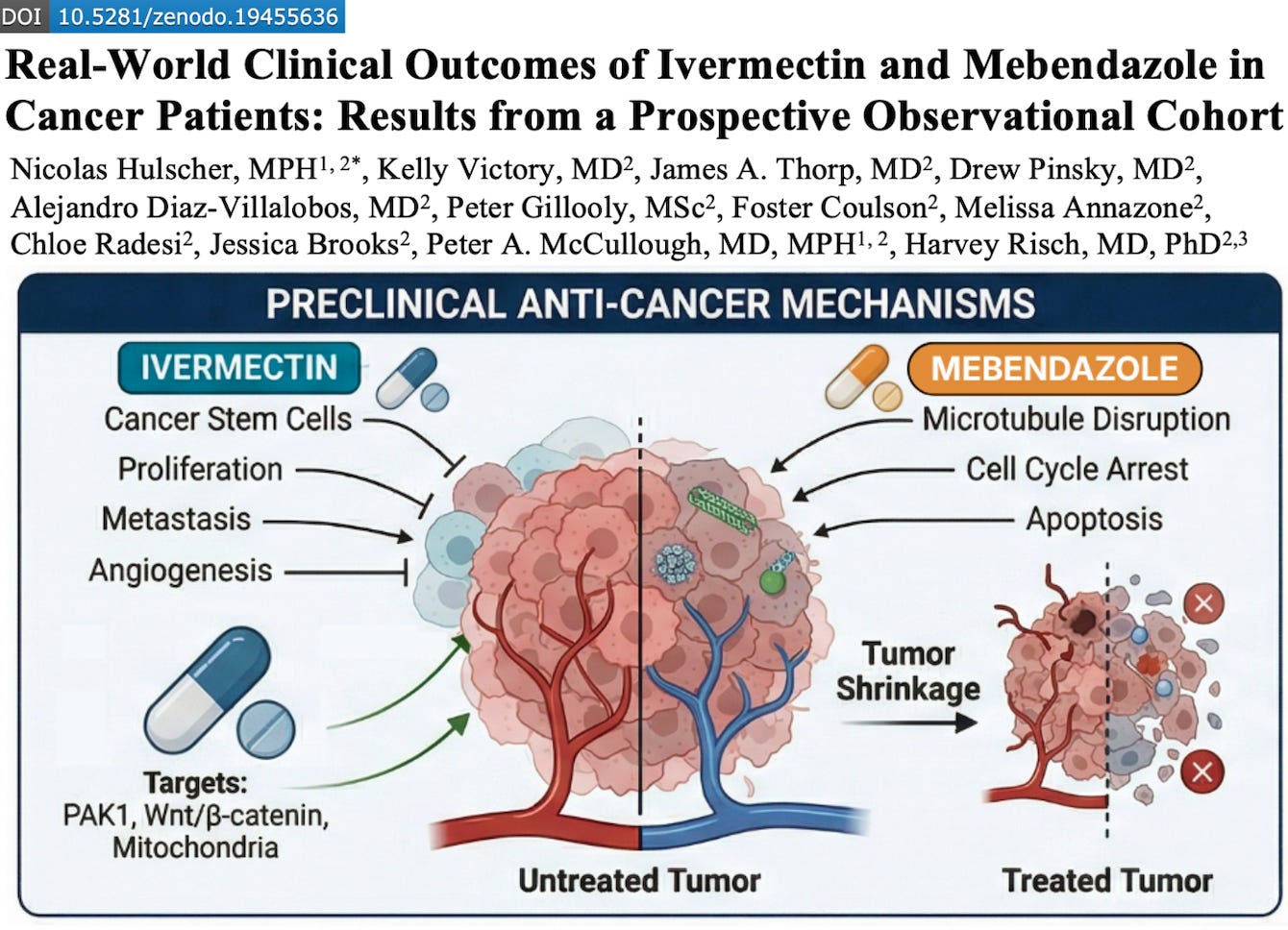
When you see a clinical benefit signal of this magnitude, paired with a deep and consistent mechanistic foundation across hundreds of studies, it warrants serious attention.
Advancing this line of investigation is no longer optional. Prospective, randomized controlled trials are urgently warranted to validate these findings, define optimal treatment strategies, and determine the full clinical potential of this protocol.
This is not the end.
At the McCullough Foundation, we are committed to advancing this critical line of cancer research—work that should have begun decades ago. Our initial findings are just the beginning.
We are now expanding into larger studies and developing rigorously documented, clinically adjudicated case reports that capture complete remissions in detail. This next phase is essential to move from signal to undeniable evidence.
But this work takes time, precision, and significant resources.
If you believe in accelerating truly innovative, independent cancer research, please consider supporting the McCullough Foundation. Your support directly fuels the studies, analyses, and clinical documentation needed to bring these findings to the world: https://mcculloughfnd.org/products/donate-1

Epidemiologist and Foundation Administrator, McCullough Foundation
Support our mission: mcculloughfnd.org
Please consider following both the McCullough Foundation and my personal account on X (formerly Twitter) for further content.


