


I joined Carl Higbie on Newsmax to break down newly released U.S. government cancer data—and the trend is unmistakable.
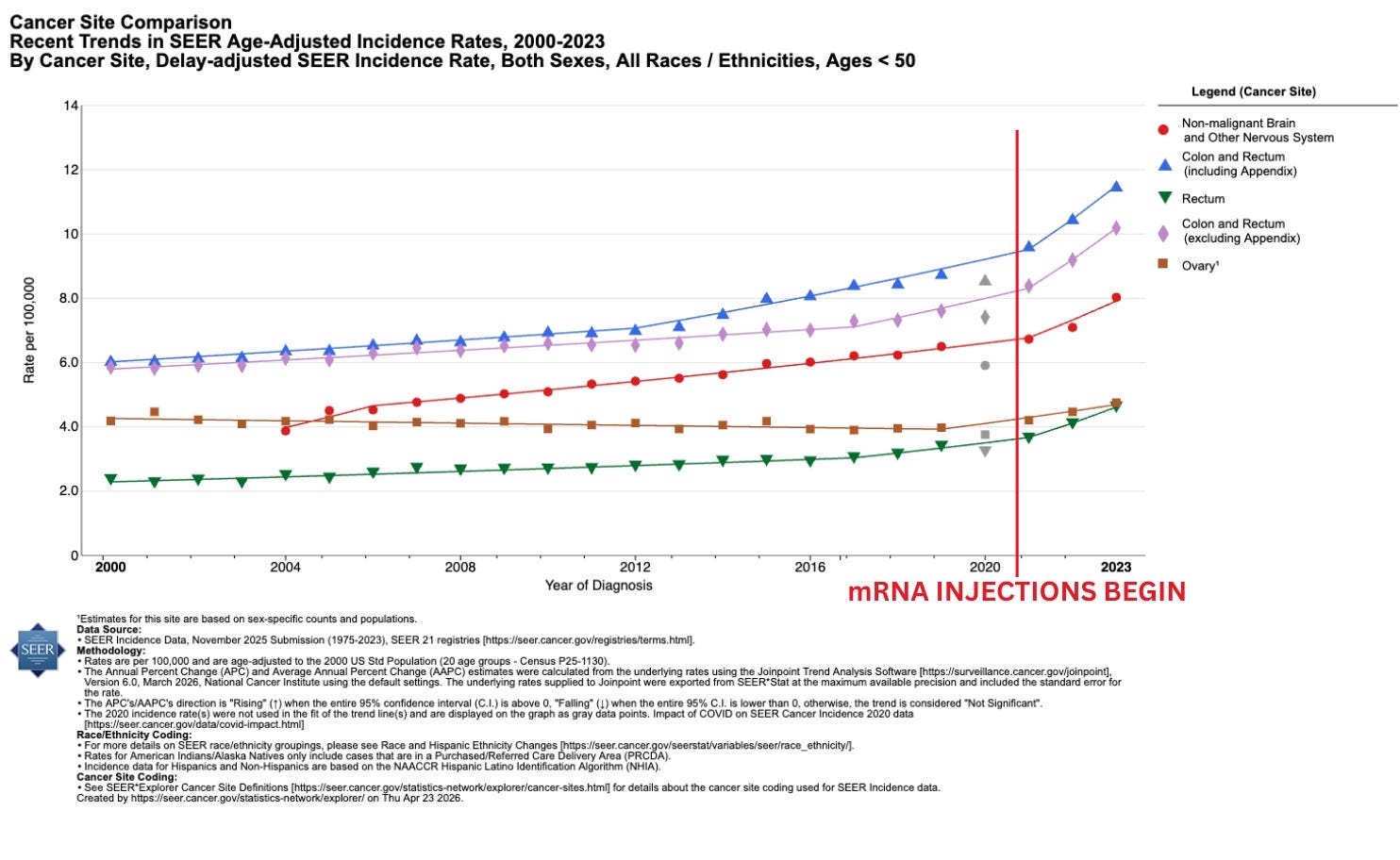

According to the National Cancer Institute’s SEER program, cancer incidence among Americans under age 50 rose more than 6% between 2021 and 2023. This sharp increase occurred squarely during the mass rollout of mRNA COVID-19 injections.
Even more concerning are the specific early-onset cancer signals from 2021 to 2023:
BRAIN TUMORS: +19.5%
COLON/RECTAL CANCER: +19.4%
SMALL INTESTINE CANCER: +15.5%
OVARIAN CANCER: +12.8%
STOMACH CANCER: +7.3%
BREAST CANCER: +3.6%
These are not subtle fluctuations—they are significant jumps across multiple organ systems, all within a compressed timeframe.
These data align with growing international evidence that have found elevated risks for several of the same cancers among COVID-19 vaccinated populations. Two landmark studies (Italy and South Korea), encompassing 8.7 million people, found that COVID-19 “vaccines” increased the risk of seven major cancers, including:
Colorectal: +35%
Stomach: +34%
Breast: +54%
Bladder: +62%
Lung: +53%
Prostate: +69%
Thyroid: +35%
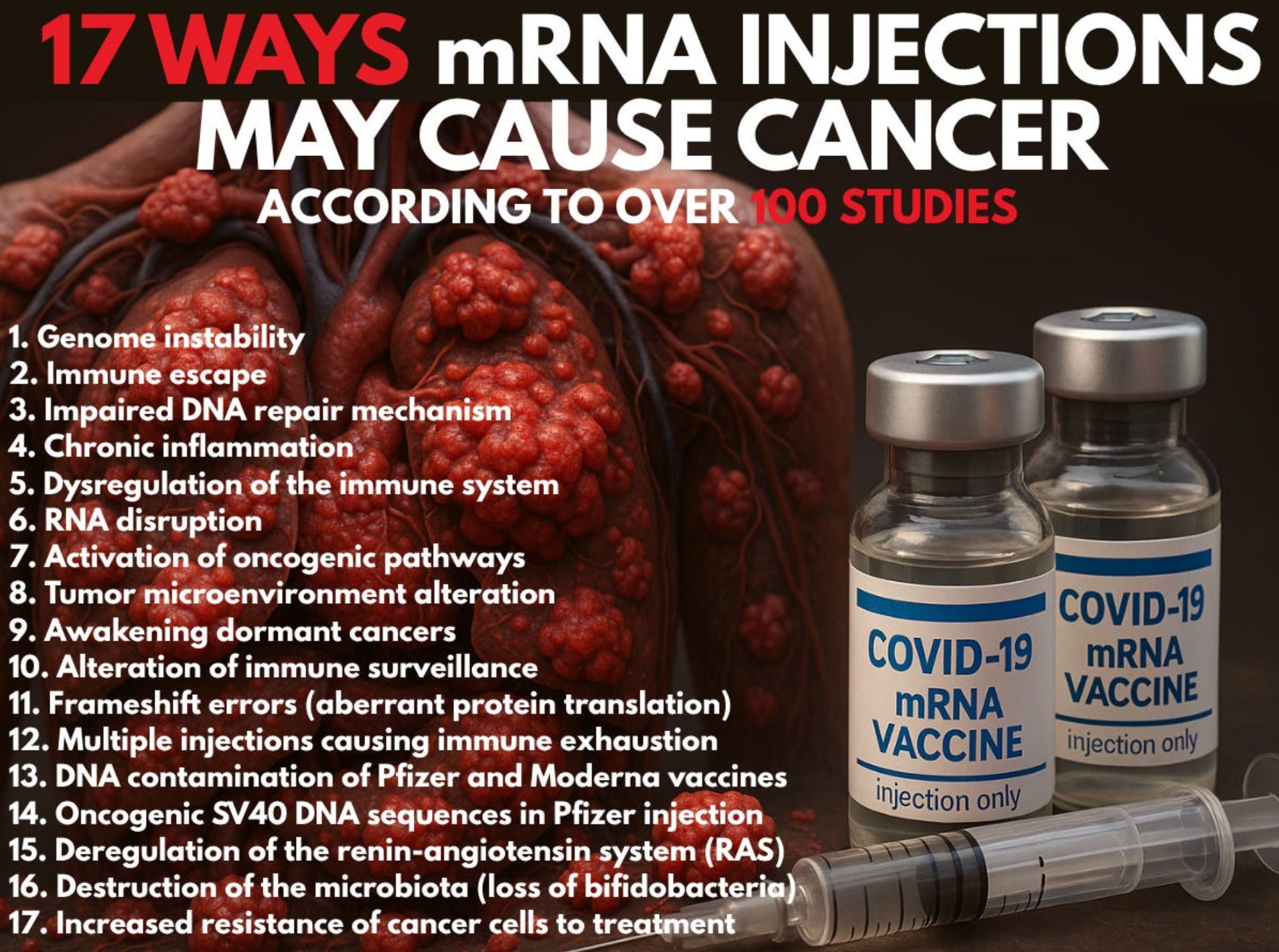
At the same time, a growing body of mechanistic literature—now exceeding 100 studies—has identified at least 17 biological pathways through which mRNA technology may induce, accelerate, or reactivate cancer.

For years, concerns about mRNA injections and cancer risk were dismissed outright. Now, with official government data confirming a sudden rise in early-onset cancers—corroborated by multiple international datasets and biological evidence—the time for action is now.
Epidemiologist and Foundation Administrator, McCullough Foundation
Support our mission: mcculloughfnd.org
Please consider following both the McCullough Foundation and my personal account on X (formerly Twitter) for further content.


