


I joined The Jimmy Dore Show to cover four major cancer developments now colliding at once: U.S. government data confirming a surge in early-onset cancers, real-world clinical outcomes with ivermectin and mebendazole, CIA-suppressed antiparasitic cancer research, and a breakthrough frog gut microbe that completely eliminates tumors in preclinical models.
CIA-SUPPRESSED CANCER RESEARCH: A 50-YEAR DELAY
One of the most striking revelations: a 1950s Soviet study showing antiparasitics could disrupt cancer growth was obtained and classified by the CIA for over 60 years.

Key findings:
Tumors and parasites share metabolic traits (e.g., glycogen dependence)
Antiparasitic compounds demonstrated anti-tumor activity in animals
Instead of being used to advance critical cancer research, the document was buried for over half a century.
IVERMECTIN + MEBENDAZOLE: REAL-WORLD CANCER OUTCOMES
We also discussed our new prospective observational cohort study evaluating ivermectin + mebendazole in cancer patients.


After 6 months, 84.4% reported to have benefited in their cancer:
32.8% reported no evidence of disease (cancer was gone)
15.6% reported tumor regression
36.1% reported stable disease
Results of this magnitude typically trigger massive clinical investment when attached to novel and patentable drugs.
FROG GUT MICROBE: 100% TUMOR ELIMINATION IN MICE
We also covered a groundbreaking preclinical discovery: A bacterium isolated from amphibian gut microbiota—Ewingella americana—was shown to:
Eliminate 100% of tumors in mice within ~15 days
Selectively target and colonize tumor tissue
Trigger durable immune memory (tumors failed to regrow upon re-exposure)
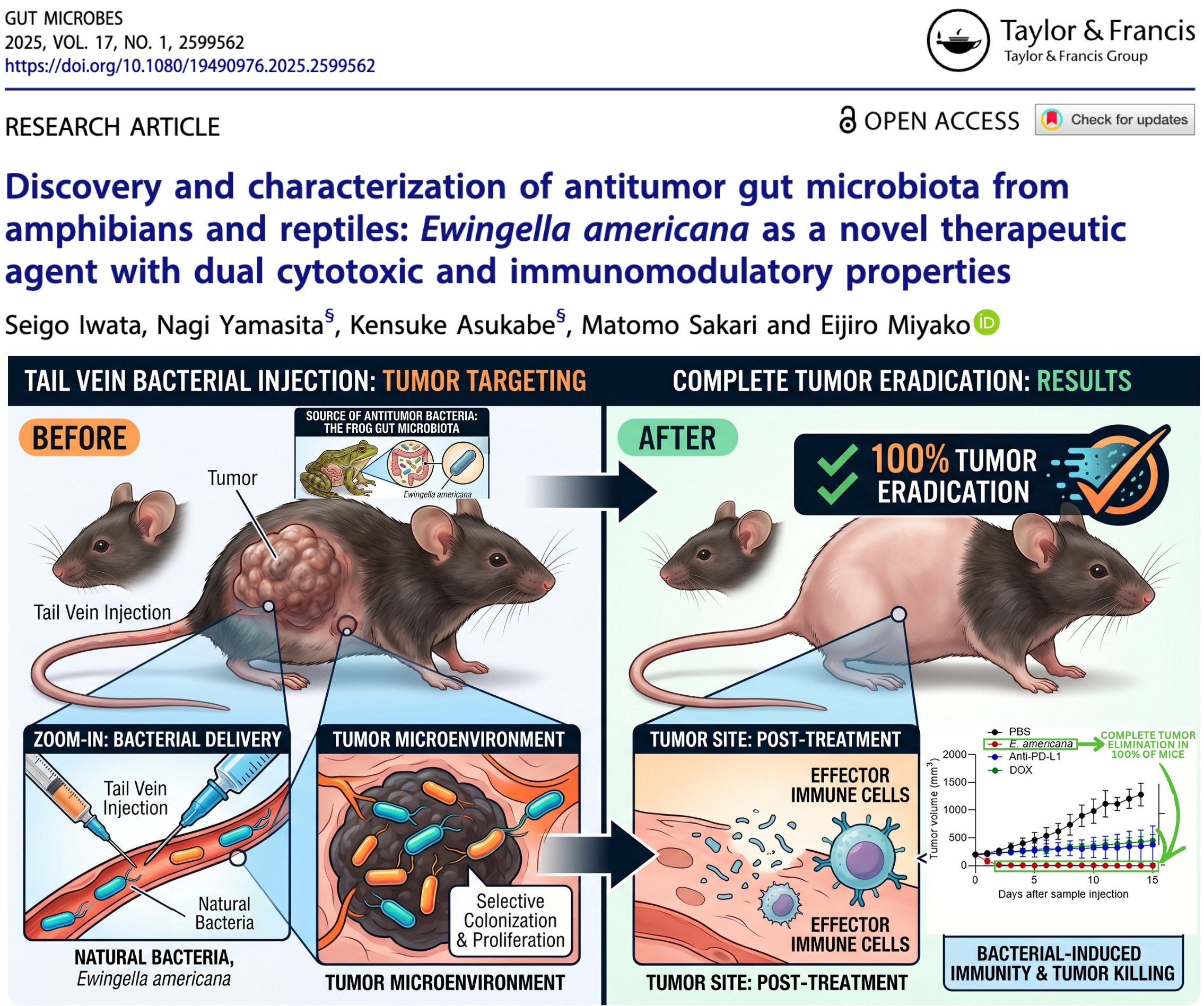

Mechanistically, it:
Directly destroyed tumor cells
Activated a robust immune response
Outperformed chemotherapy and immune checkpoint inhibitors in the model
It’s early-stage and in animals—but results like this are rare and demand immediate follow-up.
NEW CANCER DATA: A SIGNAL THAT CAN’T BE IGNORED
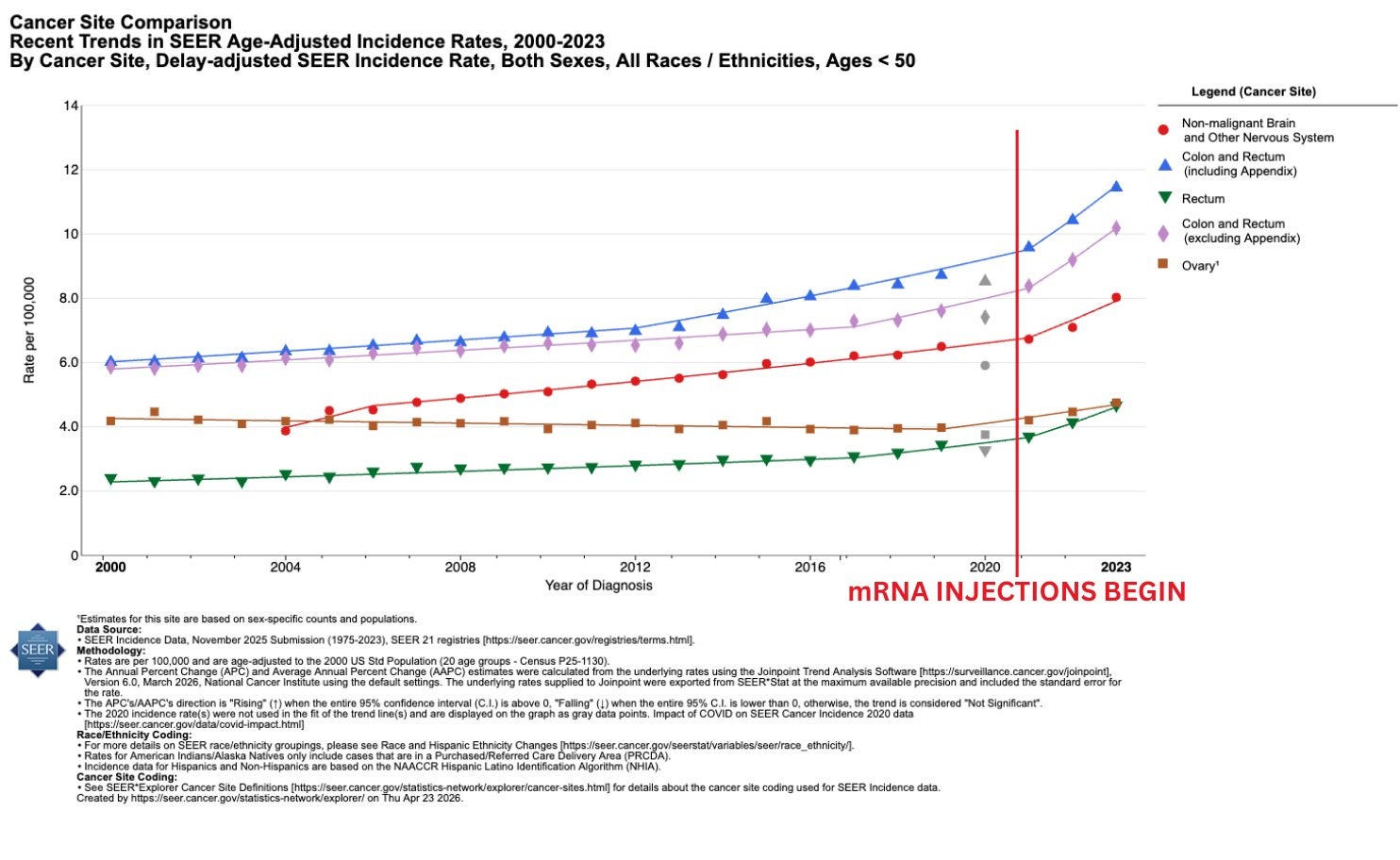
The latest U.S. government cancer surveillance data (SEER) shows a 6.4% rise in early-onset cancers (under 50) from 2021 to 2023—a sharp increase during the mass mRNA injection campaigns.
Specific cancers surged even higher:
BRAIN TUMORS: +19.5%
COLON/RECTAL CANCER: +19.4%
SMALL INTESTINE CANCER: +15.5%
OVARIAN CANCER: +12.8%
STOMACH CANCER: +7.3%
BREAST CANCER: +3.6%

This isn’t an isolated signal. It aligns with three other datasets from three countries:
CDC WONDER mortality data (138,000 excess U.S. cancer deaths since 2021)
South Korean study of 8.4 million (increased risk of 6 major cancers in the COVID vaccinated)
Italian study of 300,000 (increased risk of 3 major cancers in the COVID vaccinated)
Together, they form a consistent international pattern that can’t be ignored.
CONCLUSION
Clearly, the conventional cancer model has failed. Cancer remains the second leading cause of death worldwide, rates continue to rise, and 33% of Americans are projected to develop it in their lifetime.
It’s abundantly clear that things need to change. The question now is whether these latest breakthroughs will be seriously investigated—or deliberately ignored.
Epidemiologist and Foundation Administrator, McCullough Foundation
Support our mission: mcculloughfnd.org
Please consider following both the McCullough Foundation and my personal account on X (formerly Twitter) for further content.


